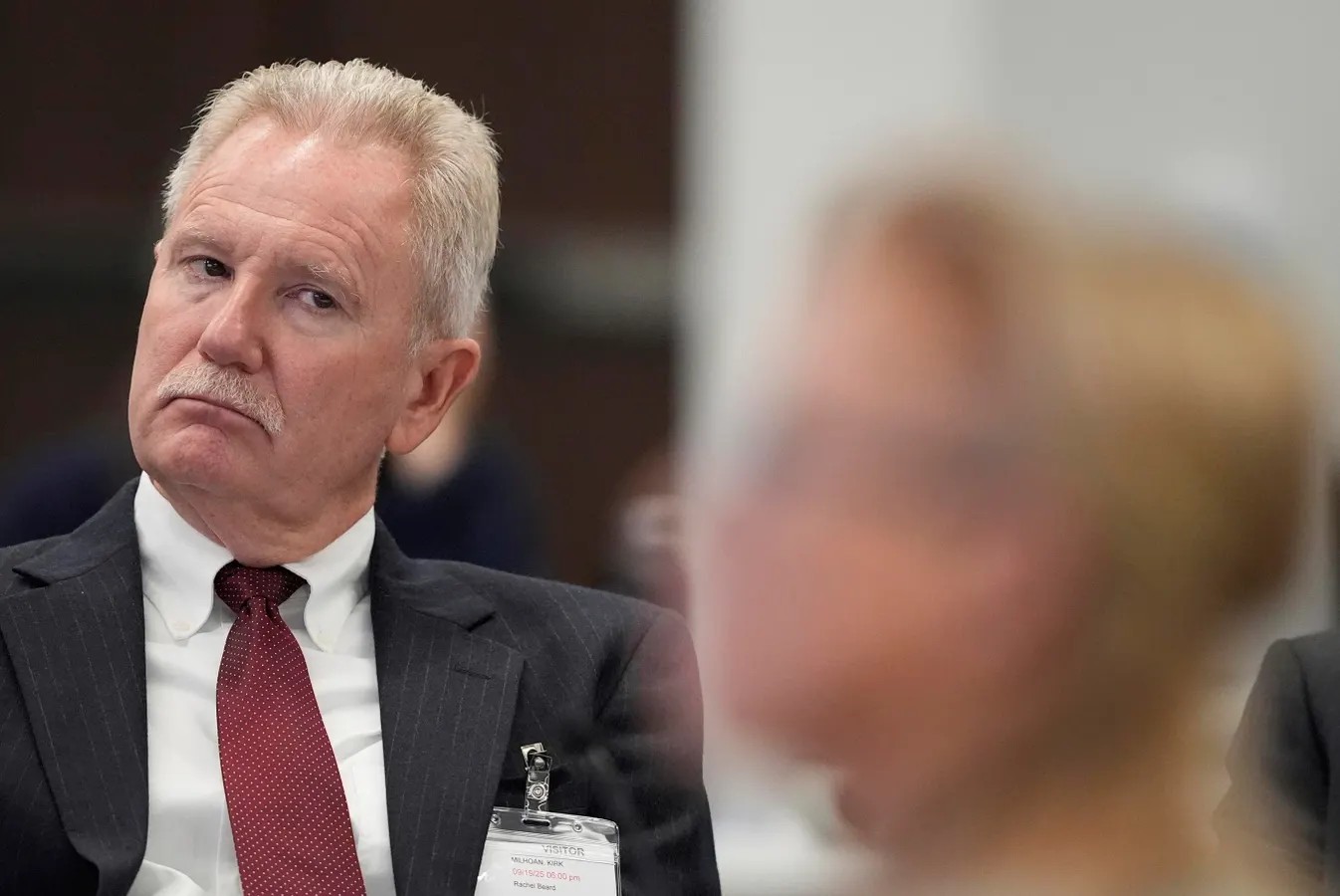
The new chair of the Centers for Disease Control and Prevention’s (CDC) vaccine advisory committee, Dr. Kirk Milhoan, has publicly declared that personal freedom will be the guiding principle of his leadership. This marks a sharp departure from the panel’s historical focus on public health outcomes, raising concerns among epidemiologists and public health officials.
New Leadership, New Priorities
Milhoan, appointed after a wholesale reshuffling of the Advisory Committee on Immunization Practices (ACIP) by Health and Human Services Secretary Robert F. Kennedy Jr., stated in a recent podcast interview that individual autonomy takes precedence over collective health considerations. This shift in philosophy is already reflected in the committee’s actions: routine COVID-19 and flu shots have been cut, and many states are choosing not to follow these new recommendations.
Who Is Kirk Milhoan?
Dr. Milhoan is a pediatric cardiologist who also leads a church in Maui, where he previously resisted COVID-19 safety measures like masking. His views align with vaccine skepticism, and he has promoted debunked treatments like ivermectin through his affiliation with the Independent Medical Alliance. Critics question how his background in cardiology informs public health decision-making, especially given his stated belief that vaccines cause cardiovascular disease – a claim unsupported by mainstream scientific consensus.
The Argument for “Autonomy”
Milhoan argues that forcing vaccinations infringes on individual liberty. He claims that restoring “trust” in public health requires making immunizations voluntary. He even suggests that public health officials should observe the consequences of lower vaccination rates, stating, “What we’re going to have is a real-world experience of when unvaccinated people get measles.”
This approach ignores decades of established epidemiological data. Polio and measles immunizations have historically been associated with significant reductions in disease incidence, and declining vaccination rates pose a direct threat to herd immunity.
The Real-World Consequences
The consequences of Milhoan’s perspective are already apparent. Measles cases are at their highest level in over 25 years, with three unvaccinated children dying last year. One in five measles cases requires hospitalization, and complications such as pneumonia, encephalitis, and deafness are common. Milhoan’s suggestion to eliminate polio and measles vaccines as an “observation” is viewed by experts as reckless, given the well-documented risks of these diseases.
Elizabeth Jacobs, Ph.D., a retired epidemiologist, described Milhoan’s stance as “one of the most disturbing things I’ve seen in my entire career.” She noted that the consequences are predictable: children will get sick, be hospitalized, and die from preventable diseases.
Literacy and Informed Consent
Milhoan also advocates for “detailed informed consent” from parents, despite the fact that a significant portion of the U.S. adult population (21% in 2024) is functionally illiterate. This raises questions about whether parents can realistically assess the risks and benefits of vaccines without expert guidance.
The CDC’s ACIP has historically been charged with improving public health, but under Milhoan’s leadership, the committee appears to be prioritizing individual autonomy over collective well-being. This shift in priorities has raised alarms among public health experts, who warn that it could lead to the re-emergence of preventable diseases and a decline in overall population health.