Amyotrophic lateral sclerosis, or ALS, is a cruel disease. It strips away control, inch by inch, until breathing becomes the final hurdle. Most of us know it as Lou Gehrig’s disease. I know it as the slow, heartbreaking fading of my uncle. I was a kid then. Too young to remember him walking, running, living. I only knew the man in the wheelchair, communicating in stark “yes” or “no” clicks through a computer. It was my first real encounter with mortality.
That memory sears into every study I read. Every incremental step toward understanding feels like a victory, however small.
New data from a massive study suggests two specific habits might lower the odds of developing this condition. Not prevent it. Lower the risk. There is a difference.
What the research actually shows
Researchers tracked 502,409 people over 14 years. The average participant was 57. In that span, only 675 individuals developed ALS. That is 0.14%. Rare, but devastating when it happens.
The study, presented at the American Academy of Neurologists 78th Annual Meeting in April #2026, highlights two lifestyle factors associated with reduced risk:
- Morning chronotype. People who identify as morning types had a 20% lower risk.
- Physical activity. Those hitting at least 600 MET-minutes of activity weekly saw a 26% drop in risk.
Hongfu Li, MD, PhD, from Zhejiang University, noted that previous results were mixed. This large sample size offers clearer signal noise ratio. He linked the findings to sleep schedules matching daylight hours and the neuroprotective benefits of movement.
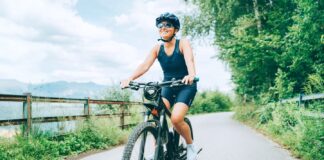
So what is 600 MET-minutes? It is not extreme athletic training. It translates to roughly 150 minutes per week of moderate exercise. Think brisk walking. Cycling. Swimming. It aligns with standard health guidelines. You already know you should do it. This just adds another reason.
Sleep duration mattered too. Getting 6 to 8 hours per night was linked to lower risk. Consistency is likely key.
Why early risers and active people might be protected
We do not know why these habits help. Correlation is not causation. But the hypotheses are compelling.
Circadian rhythms regulate cellular repair. When your sleep-wake cycle aligns with natural daylight, your body may handle oxidative stress better. Exercise reduces inflammation. It boosts blood flow to the brain. It clears out metabolic waste.
Why would morning types fare better? Perhaps their internal clocks are simply more synchronized with the solar day. Evening chronotypes—night owls—often face social jet lag. Their bodies want to sleep when society demands they are awake. That misalignment takes a toll.
Does this mean you must wake up at 5 AM to save your motor neurons? Probably not. But the data is consistent. Aligning your rhythm with daylight and moving your body daily supports neurological health.
“Previous research suggests better sleep and more physical activity… results for ALS have been mixed,” said Dr. Li. “Our study found a sleep schedule that better matching daylight hours and more physical activity were related with a lower risk.”
Note the wording. Related to. Associated with. Not cured by. Not prevented by.
What this doesn’t mean: A reality check
Let us be blunt. You can do everything right. You can wake at dawn. You can walk ten miles a day. You can still get ALS.
The cause is complex. Genetics play a role. Environmental toxins matter. Bad luck is a factor. This study does not offer a shield. It offers a statistical edge.
The absolute risk remains tiny. Most people will never develop ALS. A 26% relative risk reduction sounds dramatic. On a 0.14% baseline, the absolute drop is small.
But context matters. We are not talking about preventing the common cold. We are talking about a fatal neurodegenerative disease. Any insight helps.
This research is preliminary. It has not been peer-reviewed in a journal yet. It is presented at a conference. Take it with a grain of salt. Or rather, with scientific caution.
Should you change your schedule?
You should probably still move your body. You should probably still try to sleep in rhythm with the sun. These habits support brain health, metabolic function, long-term resilience. The benefits extend far beyond ALS.
If you are a night owl by nature, do not panic. Do not force yourself into a painful routine. But consider the shift. Can you get morning sunlight? Can you add more movement?
We cannot draw definitive conclusions. We do not know the biological mechanisms. We do not know if shifting your chronotype will help if you were born an owl.
More research is needed. Always more research.
Until then, the message is familiar. Move more. Sleep well. Live in daylight.
It is not a guarantee. It is just a better bet.