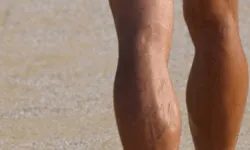
Let’s be honest. Calves rarely get the spotlight. They aren’t the glutes or the quads. But when they are actually toned, they change the entire silhouette of your leg. You move with more power. You look balanced. And frankly, it’s easier to build them than most people admit.
The anatomy here is specific. You have the gastrocnemius, the large, visible muscle that gives the calf its shape. Behind it lies the soleus, a deeper muscle often ignored. They connect via the Achilles tendon. There is also the tibialis anterior up front in the shin. It doesn’t look like part of the back of the leg, but it matters. If you want growth, you have to train the whole system, not just the visible part.
“Calves might not be the sexiest part of your anatomy, but they boost overall leg power.”
Warm-up is non-negotiable. Cold muscles snap. Don’t start heavy. Do some leg extensions. Run light on a treadmill. Cycle. Get blood moving first.
How to Target the Soleus with Bent Knee Calf Raises
Most people stand up and jump. That hits the gastrocnemius. To hit the soleus, you need to bend the knee.
The bent knee calf raise is the most efficient way to isolate that deep muscle. You can do this at home or in the gym.
Here is the mechanics:
– Sit on a bench or chair.
– Place a weight on your knees. A barbell works. Heavy dumbbells work too.
– Keep your knees bent at 90 degrees or more.
– Push up through the balls of your feet.
Think of it as controlled agitation. You are lifting weight with your toes while the knee stays bent. This removes the gastrocnemius from the equation mostly. The soleus takes the load.
You don’t need a high volume. One set of twenty repetitions a day is enough to start. Consistency beats intensity here. The soleus is a postural muscle. It’s built for endurance, not max lifts.
Standing Calf Raises for the Gastrocnemius
Once the warm-up is done and the soleus is awake, you switch stance. The straight knee standing calf raise targets the bigger muscle. The gastrocnemius crosses the knee joint. When you lock your leg, you engage it fully.
Stand on the edge of a step or a raised platform. Let your heels drop down for a deep stretch. Then push up as high as you can. Pause at the top. The squeeze matters.
This is the classic movement for size. It’s simple. It’s brutal. And it works.
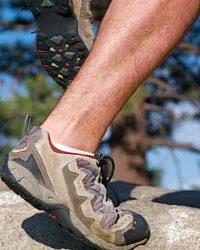
The Soleus vs. Gastrocnemius Split
You might think lifting your heels is lifting your heels, but knee position changes everything. Straight legs target the gastrocnemius. Bent knees hit the soleus. If you want bigger calves, you need both.
The gastrocnemius is the large, bulbous muscle you see on the back of the lower leg. It crosses both the knee and ankle joints. This means it only works effectively when your knee is straight. Standing calf raises do exactly this. You stand on an elevated surface. A bottom stair step works fine. Keep your toes and forefoot planted. Drop your heels down, then lift them as high as possible.
Resistance helps. Dumbbells. A barbell. A weighted vest. But body weight alone can still build muscle if you push hard enough. Aim for a set of 20 reps. It burns. That is the point. The soleus, however, sits deeper. It only crosses the ankle. It needs knee flexion to be fully engaged. That is why seated calf raises are non-negotiable.
Fixing Imbalances with Unilateral Training
Bilateral training is fine. Standing on two legs. Sitting and pressing with both feet. But what if one leg is stronger? What if one calf looks smaller?
Unilateral training addresses this. It means working one side at a time. You switch sides each session. You zero in on one leg. For standing raises, you lift off one foot and push with the other. Your body weight becomes the resistance. For seated raises, you cross your legs. The working foot lifts the body while the other stays still.
This method reveals weaknesses. You will likely find one side struggles more. That is not a failure. It is data. It shows where power output is uneven. Correcting these imbalances creates a more symmetrical physique. It also prevents injury by ensuring both sides can handle load equally. The choice between bilateral and unilateral is yours. But if you have a lagging leg, unilateral training is the fix.
Protein Balance and Muscle Growth
Exercise breaks muscle down. Protein builds it back up. You cannot out-train a poor diet. But you also cannot build muscle without training. The balance matters more than the total amount.
You need enough protein to support repair. Not too little. Not so much that it crowds out other nutrients. The timing is less critical than people think. Total daily intake drives growth. But spreading it out helps. Aim for 20-30 grams per meal. This maximizes muscle protein synthesis.
Carbohydrates play a role too. They spare protein. They fuel the workouts. Without glycogen, your performance drops. Lower performance means less stimulus. Less stimulus means less growth. So eat enough carbs. Eat enough protein. Keep the balance steady. It is not complicated. It is just consistency.
The Missing Piece
Most people skip the soleus work. They stand up. They raise their heels. They feel the burn in the back of their calves. And they stop. They think they are done.
They are not. The soleus makes up about half the calf mass. If you ignore it, you leave half your potential on the table. Seated raises are boring. They are hard to load heavily. They feel less impressive than heavy standing lifts. But they are essential.
Combine straight
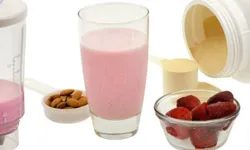
Muscle growth isn’t just about lifting weights. It requires a strategic combination of nutrition and specific mechanical stress. Protein is the non-negotiable foundation. Without it, the body cannot repair the micro-tears caused by training.
You can source this from whole foods like meat, fish, and dairy. Or you can use shakes. Bodybuilders often rely on shakes during intense training blocks. But the source matters less than the total intake.
Adult men generally need about 56 grams of protein daily. Women need roughly 46 grams. These are baseline numbers. They don’t account for heavy lifting. When you exercise, you break down muscle fibers. Recovery demands more fuel.
Depending on your regimen, you may need 50 percent more protein during training phases. This extra intake helps you build muscle faster. It prevents catabolism. Without it, progress stalls.
The Mechanics of Hill Repeats
Not all exercises are created equal. Some target specific areas better than others. For calf development, hill repeats stand out.
They sound tedious. They often are. But they work. Hill repeats build calf muscles quickly. They also boost strength and power across all leg muscles. The incline changes the biomechanics. It forces greater engagement of the gastrocnemius and soleus.
Find a hill between 50 to 200 yards (45 to 182 meters) long. Flatlanders have an alternative. Use a treadmill with an incline. Set it to match the distance and angle.
Run up at the threshold of your speed and strength. This is not a jog. It is a powerful ascent. Keep your ankles flexed. Maintain an upright posture. Relax your neck and shoulders. Tension there wastes energy.
Reach the top. Carry your momentum for a few yards. Then turn around. Jog down to recover. Repeat this six to 12 times.
Consistency Over Speed
None of this works overnight. Muscle growth is slow. It is incremental. But these methods are time-tested. They are effective.
They require discipline. They require patience. But they lead to bigger, stronger calves. If you want more details on muscle building, keep searching. The journey continues.