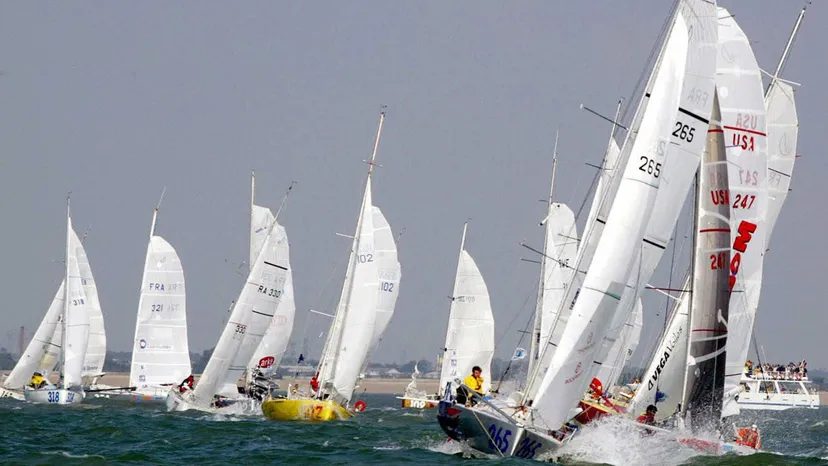
Every odd year since 1977, a bizarre group of sailors has converged on France for the Mini Transat 6.50. It is not for the faint of heart. These competitors climb into tiny yachts—barely 21 feet long—and head west into the Atlantic. The goal? Reach Le Marin Bay in Martinique. That is roughly 4,000 miles of open water.
The race is split into two legs. First, France to the Canary Islands. Then, the Canary Islands to the Caribbean.
There is one major catch. You are alone.
No crew. No backup. Just you, the wind, and a boat that cannot steer itself properly without help. The journey takes three to four weeks. During that time, sailors rarely sleep for more than 20 minutes at a stretch.
How does this not end in tragedy?
A study from the University of Bologna in Italy tried to answer that exact question. The research was published in Nature and Science of Sleep on May 4, 2020. Scientists wanted to know if some people have a biological edge. Can you train your body to ignore the need for rest?
The Sleep Strategies of Extreme Mariners
Before the race, researchers tracked 42 sailors. They looked at training habits. They measured sleep quality. They tracked somnolence. They also identified chronotypes—the natural preference for being a morning lark, a night owl, or somewhere in between.
Only half of the sailors had a conscious plan for sleep.
“Expert skippers often make this choice,” said Professor Giuseppe Plazzi, who coordinated the study. “Indeed, expert sailors with a track record of miles and miles of offshore sailing are more mindful of the importance of sleep management.”
But what was that plan?
More than half of the strategists (52 percent) tried to “bank” sleep. They piled on extra rest before the start. The logic was sound. Build up a sleep reserve. Then spend it during the race.
About a quarter of the sailors chose polyphasic sleep. This means short naps scattered throughout the day and night. Previous pop culture references, like the TV show Seinfeld, have mocked this approach. It rarely works well in practice.
The final 22 percent chose a different path. They accepted gradual sleep deprivation. They knew they would be exhausted. They believed they could hold on until the finish line.
Chronotypes and Biological Disadvantages
The data on chronotypes was revealing. About 40 percent of these sailors were morning people. They rose early. They slept early.
The other 60 percent were “hummingbirds.” They sat in the middle ground. Not a morning person. Not a night owl.
Not a single sailor was a night owl.
Researchers suggest this might be a disadvantage. Night owls have to fight their natural rhythms to stay awake when the sun is up. In a race where the sun dictates visibility and weather patterns, fighting biology is a bad idea.
Morning people were less likely to use a complex pre-race sleep strategy. They just seemed to handle the rhythm better. Hummingbirds, however, had to work harder to manage their cycles.
Does Strategy Actually Change the Outcome?
Here is the surprising part.
Regardless of the strategy—banking sleep, polyphasic naps, or enduring exhaustion—there was no real difference in arrival times for either leg of the race.
Speed did not increase. Time did not decrease.
Sailors use autopilot to keep the Mini 6.50 on track while they nap. The boat does the heavy lifting. The human element is just about staying alive and alert enough to intervene when things go wrong.
“Our next step will be to closely monitor sleep-wake cycles both during the training and during the race,” Plazzi said. “In this way, we will be able to devise increasingly effective and precise sleep management strategies.”
The Myth of Sleep Banking
It is a common misconception that you can prep for sleep deprivation by sleeping more beforehand.
Science says otherwise.
No matter how much you rest before a long event, sleep deprivation causes steep decreases in mental and physical performance. The brain does not store extra hours of rest like a battery. It recovers. It resets. It does not hoard.
When the body finally demands sleep, it takes it. Or it fails.
The Mini Transat sailors are not beating biology. They are negotiating with it. And the negotiation is brutal.
There is still much to learn about how these specific athletes maintain performance under such extreme duress. Future studies will look closer at the actual sleep cycles during the race. Real-time data. Not just pre-race surveys.
Until then, the sailors keep going. Alone. In the dark. For 20 minutes at a time.