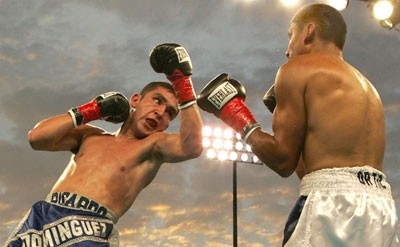
Boxing is deceptively simple. Two people. Fists. Until someone falls down.
It’s one of the oldest sports on earth, yet it remains weirdly complicated. Add centuries of history, a parade of unhinged characters, and enough corruption to fill a prison yard, and you get something far more gripping than just two guys beating each other up. You get drama. You get tragedy. You get glory.
This is the start of a deep dive into the sweet science. We are looking at the basics first. How you win. How you lose. The hierarchy of titles. The biology of a punch. The danger. And yes, the rules that keep it from being a street fight.
The Rules of Engagement
A professional bout is not a brawl. There are referees. There are judges. There are lines that cannot be crossed without consequence. The goal is to reduce injury while keeping fans on the edge of their seats. Amateur (Olympic) boxing has different rules than professional boxing. And even within pro boxing, different organizations have slightly different rulebooks.
Before a big fight, there is a rules meeting. The referee, the cornermen, and the fighters go over the specifics. What is allowed this time? What is strictly forbidden?
The Square Circle
The stage for this violence is a raised platform. Canvas over an inch of padding. Four steel posts holding up flexible ropes.
The size matters. Smaller venues might have a ring that is 16 feet to a side. Olympic boxing rings can go up to 20 feet in diameter. Some professional organizations allow rings up to 25 feet wide. That extra space changes the geometry of the fight. It changes how boxers move.
What You Cannot Do
Boxing has a specific list of fouls. These are not suggestions. They are hard limits designed to stop matches from degenerating into chaos.
You cannot:
– Strike below the belt.
– Hit an opponent who is down on the canvas.
– Kick.
– Strike with elbows, forearms, or the inside of the hand (a slap).
– Head butt.
– Bite ears. (Yes, this was a rule before Mike Tyson proved otherwise.)
– Grab the ropes for leverage.
– Poke the eye with a thumb. (Muhammad Ali’s right eye was swollen and red after he beat George Foreman in the 1974 “Rumble in the Jungle” because Foreman poked his eye. It’s not a joke.)
– Wrestle or grapple excessively.
Commit one of these fouls? You lose points. Do it repeatedly? The referee disqualifies you. Simple.
The Clock
Boxing is timed. Professional championship fights are 12 rounds. Each round lasts three minutes. There is a one-minute rest period between rounds.
They used to go 15 rounds. The world changed after the tragic fight of Duk Koo Kim. Now, 12 is the max for a title fight. Lower-ranked pros might fight 10 rounds or fewer.
Amateur boxing is shorter. Three, four, or five rounds. Two minutes per round. Junior divisions can have even shorter rounds. The clock is always ticking.
The Gear
Boxers wear padded leather gloves. They protect the boxer’s hands. They also reduce the damage to the opponent’s head. It’s a paradox. The gloves make the fight longer by protecting the hands, but they also allow boxers to throw harder punches without breaking their own wrists.
Under the gloves, the hands are wrapped in athletic bandages. The wrapping is strictly regulated. Too tight? You cut off circulation. Too loose? You break your hand.
Amateur boxers also wear headgear. It protects against cuts and scrapes. It does not prevent concussions. That is a myth.
The Objective
So, what is the point? To win, you need to score points or stop your opponent.
Points are scored by landing clean punches. The judges watch the chin, the body, the movement. Who is controlling the ring? Who is landing harder shots? Who is defending better?
A knockout is the ultimate victory. You hit so hard your opponent cannot get up. Or they are unable to continue because of injury. The referee stops the fight. That is a technical knockout.
Sometimes, the judges decide. If the fight goes the distance, the judges look at their scorecards. Who won more rounds? Who landed the more effective punches?
It is not about who looks worse. It is not about who is more aggressive. It is about who wins the rounds.
Why It Matters
Boxing is dangerous. Skull fractures. Retinal detachment. Brain damage. These are not abstract concepts. They are the cost of admission.
But it is also pure. When the bell rings, there is no coach. No teammate to pass to. No playbook. Just you, your opponent, and the space between you.
The rules keep it civilized. The gloves keep it survivable. The rounds keep it fair.
But the outcome is never guaranteed. That is why we watch.
The Anatomy of a Knockout
A boxer’s primary objective is simple: drop the opponent and keep him there until the referee’s count hits ten. That is a knockout, or KO, and it ends the bout instantly for the victor. When that impact lands, the standing fighter must immediately back away to a neutral corner. Not the one where his own team waits. Not the other side. Just somewhere out of the way so the referee can do his job.
The referee is the only non-participant allowed in the ring. He checks the downed fighter. Is he conscious? Can he stand? Is he able to defend himself? If yes, the fight resumes. But there is a catch in many rule sets: the mandatory eight count. Even if the fighter bounces up like nothing happened, the ref makes him wait out eight seconds. It is a safety brake. A moment to ensure the brain has stopped spinning.
Sometimes the rules are stricter. In some systems, three knockdowns in a single match trigger a technical knockout, or TKO. The bell might not ring, but the fight is over. The loss is often recorded on the winner’s record as a KO anyway. A TKO can also happen if the referee, the ringside doctor, the trainer, or the fighter himself realizes the damage is too severe. Continuing would be reckless. So, the fight stops.
Saved by the Bell?
What happens if the round ends while a fighter is still on the canvas? It depends on the rule book. In some jurisdictions, the fighter is “saved by the bell.” The round ends, the ten count is halted, and the downed boxer gets to shuffle back to his corner for the mandatory minute of rest. He survives the round.
Other rules systems disagree. They insist the ten count continues regardless of the round’s end time. If the count hits ten before the fighter rises, he loses. The clock does not stop for the bell. The impact is what matters, not the schedule.
When No One Falls
Most fights do not end with a body hitting the floor. When the bell rings for the final round and both fighters are standing, the decision falls to the judges. Professional bouts typically use three judges. Olympic boxing uses five. Their job is to score each round.
They do not just guess who won. They assign points based on clean punching, ring generalship, and defense. Every round is scored individually. At the end of the match, those points are tallied. The fighter with the higher score wins. It is a decision.
Sometimes the scores are so close that the judges disagree. One judge might have Fighter A winning 49-47. Another might have Fighter B winning 49-47. The referee does not vote. He watches. He ensures safety. He counts. He does not decide the winner unless the fight is stopped early. The judges hold the pen. They hold the power.
But how exactly do they determine who wins a round? And what happens when the scores are tied? That is where the scoring system gets specific.
Scoring a round isn’t just about who threw the most punches. It’s about clean hits. Specifically, scoring punches. These are strikes with the knuckle side of the fist that land on the front or sides of the opponent’s head or body, above the belt line. Olympic boxing makes it mechanical. Judges use electronic scoring devices to track exactly who lands more of these specific strikes in a round. Fouls matter too. If a boxer commits a foul, his opponent gets two extra points added to the round total.
Professional boxing is messier. More subjective. Judges might count punches, sure. But they also weigh aggression. Ring control. The tempo. Damage inflicted. Imagine this scenario. The red boxer lands a dozen solid jabs all round. He’s active. He’s technical. But the blue boxer? He waits. He sets a trap. Late in the round, he nails the red boxer with two hard hooks. The red boxer is dazed. Staggered. Shaken. Judges might easily award that round to the blue boxer. Different judges might score it differently too. It’s not always clear cut.
The points themselves follow a simple math. Five-, 10-, or 20-point systems. They all boil down to the same logic. In the standard 10-point system, the winner of the round gets 10 points. The loser gets 9. If there was a knockdown, or one fighter completely dominated, the score might be 10-8. If a judge genuinely can’t decide who won, it’s a 10-10 draw for that round.
Decoding Boxing Match Outcomes
When the final bell rings, one of four things happens.
- Unanimous decision. All three judges have the same boxer as the winner. Clear cut.
- Split decision. Two judges score for one boxer. One judge scores for the other. The winner is decided by a single point margin across the cards.
- Majority decision. Two judges pick a winner. One judge calls the match a draw. The boxer with the two votes wins.
- Draw. Each judge picks a different boxer, and one calls it a draw. Neither boxer wins. The match ends in a tie.
There’s a rarer outcome too. A majority draw. This happens when two judges score the match as a draw, and one judge scores for a specific boxer. It’s close to a draw, but technically one fighter had the edge on one card.
Understanding Boxing Weight Classes and Titles
For the last century, boxers have been sorted by weight. This is for safety. And fairness. Punch power comes from mass. Muscle. A 200-pound man fighting a 140-pound man would be a slaughter. Serious injury would be likely. Weight divisions prevent that lopsidedness.
These divisions are mostly uniform globally. Some bodies recognize intermediate classes—those falling between the main ones. The World Boxing Association (WBA) and the World Boxing Council (WBC) list the current divisions. Note the naming quirks. The International Boxing Federation (IBF) and the World Boxing Organization (WBO) call the “super” divisions “junior” divisions of the class below. Super Bantamweight, for instance, is Jr. Featherweight to the IBF. The weight listed is always the upper limit for that division.
Inside each division, one World Champion is crowned by each sanctioning body. The title is represented by a decorative belt. But here’s where it gets confusing. Different bodies have different champions. You could have a WBA Featherweight Champion and a completely different IBF Featherweight Champion. Who is the real champion? It depends on which organization you respect more.
Promoters love to fix this confusion. They set up unification matches. These are fights between champions of different organizations. The winner takes both belts. They unify the championship. The WBA, WBO, WBC, and IBF recognize each other’s titles for this purpose.
- Unified Champion: Holds two belts in one division.
- Super Champion: Holds three belts.
- Undisputed Champion: Holds all four major belts.
How Boxers Earn a Title Shot
There is no single global governing body for boxing. The WBA, WBO, WBC, and IBF hold sway, but their influence varies by region. Local boards like the British Boxing Board of Control (BBBC) or the Nevada State Athletic Commission (NSAC) enforce rules in their territories. They don’t always publish rankings. Dozens of smaller organizations exist too.
So how does a fighter get a title shot? He climbs the ranks. Each organization publishes monthly rankings of their top boxers. The current champion sits at the top. Then come the contenders.
A boxer moves up by fighting tougher opponents. Rankings are driven by win-loss records. The difficulty of opponents beaten. How convincing the victories were.
Top contenders get a shot at the title. The current champion must defend the belt regularly. This ranges from once every nine months to once a year. If one contender stands out, the champion and the contender negotiate the fight terms. Their managers and promoters handle the business side.
If multiple contenders look equally matched, elimination matches are held. These series unfold over months. The winner of the elimination series becomes the sole challenger for the title.
The Mechanics of the Ring
Step into a ring and start swinging wild, and your career is over before it begins. Boxing isn’t just chaos; it’s a structured exchange of attack and defense. Defense starts with the stance. Feet shoulder-width apart. For a right-hander, the right foot sits slightly back. The right hand guards the chin, elbow tucked. The left hand extends just inches from the face, elbow bent. This isn’t just posture. It’s a base. It creates a platform to block, dodge, and launch offense from. You’ll see fighters drop their gloves lower. Sometimes it’s strategy—luring an opponent in for body shots. Often, it’s just fatigue. Or laziness.
Early in the bout, boxers bob and weave. They bounce. Shift weight from one foot to the other. A moving target is harder to hit. It disrupts the opponent’s rhythm. But this defensive dance doesn’t last. In fights that go beyond six or seven rounds, the bobbing stops. Legs get heavy. Energy drains. The movement decreases tremendously as boxers tire.
The Arsenal: Four Core Strikes
It looks like there are infinite ways to throw a punch. In reality, a modern boxer’s toolkit relies on four main punches. Mastering these is the foundation of basic boxing punches.
- The Jab : Straight. Low power. Thrown with the lead hand (left for orthodox). It’s a probe. It tests the opponent. It “finds the range.” Enough jabs wear a guy down. It’s the most frequent strike in boxing, used to disrupt rhythm rather than knock out.
- The Hook : A curved arc. The fist swings out to the side before snapping back in. Connects with the temple or ribs. Can be thrown with either hand. It’s powerful. It bypasses the front guard.
- The Uppercut : Usually thrown with the rear hand (right for orthodox). The arm drops. Elbow pulls back. The fist launches in an upward arc. It’s designed to get under a high guard. Effective at close range.
- The Cross : The signature power punch. The right fist travels from the chin in a straight line across the body toward the face. Power comes from the shift. Weight moves forward. Right shoulder drives the punch.
Isolated, each punch is dangerous. Together, they are lethal. A combination is any series of two or more punches thrown in quick succession. The jab-cross is the most common entry. It sets up the power shot.
Fighting Styles Defined
Everyone uses these moves, but the way they combine them defines their fighting style. There are three main archetypes, though most fighters blend elements of each.
- The Boxer (Outside Fighter) : Technical. Strategic. Relies on agility and speed. This fighter stays on the outside, beyond the opponent’s reach. They wait for openings, dip in to fire a few punches, and retreat immediately. They often win by decision, not knockout. Sugar Ray Leonard and Muhammad Ali are the prototypes here.
- The Slugger : Power-centric. Throws fewer punches but aims for one clean hit. The goal is the knockout. George Foreman and late-career Mike Tyson fit this mold. They don’t need volume. They need impact.
- The Inside Fighter : Aggressive. Swarming. Moves quickly toward the opponent, absorbing some shots to get inside. Once the distance closes, they unleash a barrage of powerful punches. Joe Frazier, Roberto Duran, and prime Mike Tyson excelled at this. It’s about overwhelming pressure and close-quarters combat.
The Grind Behind the Glory
Hollywood loves the montage. The boxer running up stairs. The boxer hitting the bag until blood sprays. The reality is similar, but the scale is immense. Boxers need tremendous physical endurance. Try throwing fast punches at the air for three minutes straight. See how winded you are. Feel your arms burn. Now do it while jogging in place. That’s the baseline.
Training begins with running. Lots of it. Traditional exercises include skipping rope for agility. Hitting a heavy bag or pads held by a trainer to build striking strength. Weight lifting for mass and endurance. Sparring to gain ring IQ. You can’t fake the ring experience.
Today, the training facility has evolved. Many boxers work in modern gyms with data-driven diets. Training regimes involve computers analyzing biometrics. Expensive workout machines. Some even incorporate ballet classes to improve footwork and balance. The method changes. The requirement for endurance doesn’t.
We’re looking at a lineage that stretches back to the Hellenic Era, specifically between 323 and 146 B.C. Bare-knuckle bouts made their debut in the earliest Olympic Games. It wasn’t pretty. The Romans turned it into a gladiatorial spectacle, adding hand wraps studded with metal spikes. Most fights ended in death.
Then nothing happened for centuries.
Organized fisticuffs didn’t resurface until 18th-century England. For a long time, there were barely any rules. It looked less like modern boxing and more like the chaotic MMA matches we see today. James Figg was the first real ring legend, fighting on a bare wood platform surrounded by a fence. Then came Jack Broughton. He is widely considered the father of boxing rules. He introduced gloves for training and added rudimentary regulations to keep things from getting too lethal. He also brought technique into the equation.
But the sport remained a bloodsport until 1866.
That’s when the Marquis of Queensberry, a British boxing enthusiast, sponsored a fight under a new code of conduct. These Queensberry Rules changed everything. They mandated padded gloves. They introduced the ten-second count for knockdowns. They set rounds at three minutes. And they banned wrestling-style moves. The world gradually adopted these standards.
Why Boxing Changed Centers of Gravity
Popularity has always been volatile. England, where the modern sport took root, kept it alive. The United States saw its peak popularity in the 1930s. The latter half of the 20th century was messy. Various groups tried to form a single worldwide boxing organization. It didn’t work. So many competing bodies emerged that no single entity ever took primacy. Even as of 2007, the landscape was still a confusing patchwork of rival sanctioning bodies.
The real shift, however, was geographic.
For decades, New York City was the heartbeat of American boxing. Madison Square Garden hosted multiple fights every week. Then the center of gravity moved to Las Vegas. Why? Legal sports betting. That infusion of cash created a lucrative side business that changed the economics of the sport. It led to the era of multi-million dollar fight purses and the rise of pay-per-view television. The money changed the stakes, the fighters, and the spectacle.
Boxing Injuries and Deaths
Boxing stands alone in the combat sports world. Your success here isn’t just about outpointing an opponent or landing cleaner punches. It’s about the damage you inflict. When a fighter goes down, it’s rarely just a slip or a momentary loss of balance. More often than not, it’s the result of accumulating head trauma so severe that the nervous system short-circuits. The fighter is dazed. Disoriented. Sometimes, completely unconscious.
Even a single knockdown can trigger permanent neurological harm. But pro boxers don’t just fight once. They step into the ring dozens of times across a career. The cumulative toll is where the controversy truly lives. So much so that major medical bodies globally have taken a hard line. The British Medical Association, the American Medical Association, and the Australian Medical Association all maintain standing policies calling for the complete ban of the sport.
The High Cost of the Ring
The injuries fall into two distinct categories. First, there is acute trauma. This is the immediate, catastrophic kind that can end a life. The list of boxers who died in the ring or shortly after bouts is long and tragic. Names like Gerald McLellan, Leavander Johnson, Jimmy Doyle, Benny Paret, Randie Carver, and female boxer Becky Zerlentes are etched into the history books for the wrong reasons.
The Duk-Koo Kim case remains particularly haunting. The referee who officiated that match, along with Kim’s mother, both committed suicide in the aftermath of his death. These aren’t just statistics. They’re human lives altered or ended by the sport. By December 2006, records showed more than 1,300 boxers had died from fighting injuries. Since then, the count has climbed, with estimates suggesting 1,876 fatalities between 1890 and 2019 alone.
Then there is the slower, harder-to-quantify danger. Long-term cumulative brain damage. The medical evidence supporting the claim that boxing leads to deteriorating brain function after retirement is robust. It affects the fighters who survive the acute phase, leaving them to manage lives altered by cognitive decline.
The Shadow of Corruption
Beyond the physical toll, boxing is haunted by its own internal rot. Corruption isn’t a new phenomenon. Since those first bare-knuckle bouts in England, there have been whispers—and often realities—of fighters “throwing” matches. The motive is usually simple: satisfying a gambler who placed a massive bet on the opponent.
This link between corruption and gambling is symbiotic. The legal, high-stakes betting environment surrounding Vegas fight nights doesn’t help. If anything, it amplifies the perception that the outcome can be bought. Add in the narrative of managers and promoters raking in millions while young, often urban fighters endure a brutal, short-lived career, and you get a powder keg of criticism. Allegations of bribes and payoffs to officials in various jurisdictions fuel the belief that the sport is rigged from the top down.
Boxing Rules and Realities
For those trying to parse the mechanics of the sport amidst the controversy, here is how the rules and economics actually play out.
What moves are strictly illegal?
The rules are designed to protect specific vulnerabilities. Striking below the belt is an automatic foul. So is hitting an opponent who is down on the canvas. Kicking, striking with elbows or forearms, slapping, head-butting, and biting ears are all prohibited. You cannot grab the ropes, poke an opponent in the eye with your thumb, or engage in wrestling and excessive holding/grappling.
What are the main boxing styles?
Fighters generally fit into three archetypes:
– The Boxer: Focuses on footwork, speed, and technical precision.
– The Slugger: Relies on power, looking for the knockout blow.
– The Inside Fighter: Specializes in close-range combat, clinching, and body work.
How much money is actually made?
The financial disparity is stark. While many fighters struggle to make a living, the elite reap huge rewards. Forbes reports that Mike Tyson generated a staggering $685 million over the course of his career.
Why did the center of boxing shift to Las Vegas?
Historically, New York City was the undisputed hub of American boxing. That changed as the city’s regulations tightened and taxes rose. Las Vegas emerged as the new capital because of legal sports betting. That infusion of gambling revenue created a lucrative ecosystem of multi-million dollar purses and pay-per-view television deals. The money stayed in the ring, and the fighters followed.
The debate over whether boxing should exist in its current form remains unresolved. The medical evidence is clear. The financial incentives are powerful. The fan base is loyal. Until the balance shifts, the ring will remain a place of both glory and grave danger.